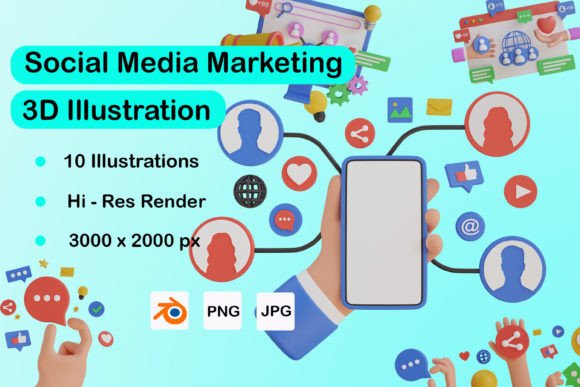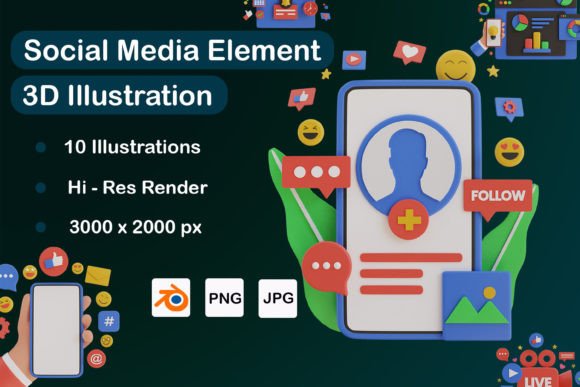
3D Social Media Element Pack: Elevate Your Digital Presence with Professional 3D Assets
The 3D Social Media Element Pack is a powerful collection of digital assets designed to enhance the visual appeal of your online content. With 20 JPG files, 20 PNG files, and 20 BLENDER files, this pack offers a versatile toolkit for designers, marketers, and creators looking to add depth, realism, and creativity to their projects. Whether you're designing banners, websites, promotional materials, or UI/UX elements, these 3D assets can transform your digital presence.
Why the 3D Social Media Element Pack Matters
As social media continues to dominate how brands and individuals communicate, the need for eye-catching visuals has never been higher. Static images and flat designs often fail to stand out in crowded feeds. The 3D Social Media Element Pack addresses this by providing high-quality, three-dimensional graphics that can make your content more engaging and memorable.
These elements are not just visually appealing—they also offer flexibility. You can customize them to fit different platforms, maintain brand consistency, and even adapt them for various marketing campaigns. The inclusion of BLENDER files ensures that advanced users can modify and expand upon the assets, while the JPG and PNG files provide ready-to-use options for those who prefer a more straightforward approach.
Common Mistakes When Using 3D Social Media Element Pack
Despite its potential, many users make mistakes when working with the 3D Social Media Element Pack. One common error is assuming that all 3D assets are created equal. Not every file may be optimized for the specific platform or project you're working on. For example, a 3D model that looks stunning in a high-resolution render might not perform well in a mobile banner due to file size or compatibility issues.
Another mistake is overlooking the importance of resolution and format. Some users may download the pack without checking if the files meet the required specifications for their project. This can lead to blurry images, poor performance, or even rejection from design platforms that have strict guidelines.
Additionally, some people rush into using the elements without understanding their intended purpose. A 3D icon designed for a website header might not be suitable for a social media post, and vice versa. Without proper planning, you risk mismatching assets and creating an inconsistent visual identity.
How to Avoid These Pitfalls
To get the most out of the 3D Social Media Element Pack, start by clearly defining your project's goals. Ask yourself: What is the primary purpose of the asset? Which platform will it be used on? What is the desired visual style? These questions can guide your selection and help you avoid misusing the elements.
Before downloading or purchasing, review the file details carefully. Check the resolution, format, and compatibility of each asset. If the pack includes BLENDER files, consider whether you have the necessary software and skills to edit them. If not, focus on the JPG and PNG files, which are typically easier to use right out of the box.
Another practical tip is to test the assets in real-world scenarios. Create a mockup or prototype using the elements to see how they look in context. This helps identify any issues early on and ensures that the final result meets your expectations.
Key Considerations Before Using 3D Social Media Element Pack
Before diving into your project, take the time to evaluate the 3D Social Media Element Pack thoroughly. Check the licensing terms to ensure that the assets can be used for your intended purpose. Some packs may have restrictions on commercial use or require attribution, which could affect your workflow.
Also, consider the source of the pack. Reputable providers often include detailed documentation, support, and updates, which can be invaluable if you encounter issues or need further customization. Avoid downloading from unverified sources, as this can introduce security risks or low-quality assets.
Finally, think about scalability. Will the elements work across different screen sizes and resolutions? Can they be adapted for future projects? Choosing a pack that offers flexibility and long-term usability can save you time and resources down the line.
Realistic Examples of Better Approaches
Instead of using a generic 3D element for every post, try tailoring your choices to match your brand’s aesthetic. For instance, if your brand uses a minimalist design, select elements that are clean and simple rather than overly complex. This creates a cohesive look that resonates with your audience.
When working with BLENDER files, don’t hesitate to experiment. You can adjust colors, textures, and lighting to better align with your project’s needs. For beginners, start with small modifications and gradually build your skills. This hands-on approach not only improves your results but also deepens your understanding of 3D design.
For those who aren’t comfortable with advanced editing, use the pre-rendered JPG and PNG files to quickly enhance your content. Pair them with text, icons, or other graphic elements to create visually striking posts that capture attention and drive engagement.
Conclusion: Make the Most of 3D Social Media Element Pack
The 3D Social Media Element Pack is a valuable resource for anyone looking to elevate their digital content. By understanding its capabilities, avoiding common mistakes, and making informed decisions, you can unlock its full potential. Whether you're a designer, marketer, or business owner, these assets can help you create compelling visuals that stand out in a competitive online landscape.
Take the time to explore, test, and refine your use of the pack. With the right approach, you’ll not only improve your work but also gain confidence in your ability to leverage 3D design for meaningful results.