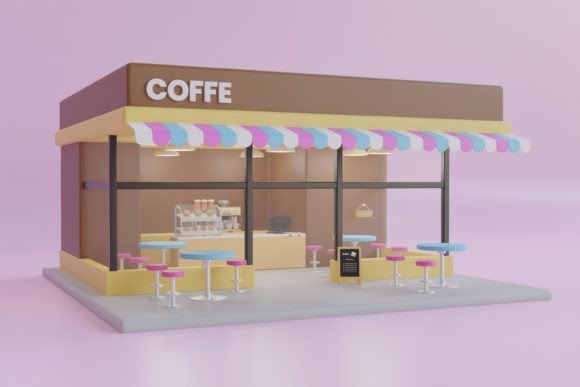
3D Illustration of a Coffee Shop: Strategic Uses and Practical Applications
A 3D illustration of a coffee shop is more than just a visually appealing image; it's a powerful tool that can drive decision-making, enhance communication, and support long-term goals in a variety of industries. Whether you're an entrepreneur launching a new café or a marketer designing promotional materials, leveraging 3D visuals offers a unique opportunity to present your ideas with clarity and creativity. In this article, we’ll explore how these illustrations can be strategically used, the planning considerations involved, and the real-world impact they can have on branding, operations, and customer engagement.
Understanding the Value of 3D Illustration for Coffee Shops
A 3D illustration of a coffee shop typically includes detailed renderings of interior layouts, furniture arrangements, lighting, and design elements such as countertops, seating areas, and signage. These images are generated using specialized software and can be exported in formats like JPG and PNG for use across digital platforms. The benefit lies in their ability to visualize concepts before execution, making them ideal for both planning and presentation purposes.
For business owners, these illustrations help in evaluating space usage and aesthetics without costly physical changes. For designers and marketers, they offer a dynamic canvas for creating compelling visuals that resonate with target audiences. When used thoughtfully, a 3D illustration of a coffee shop can bridge the gap between imagination and implementation, supporting better decisions at every stage.
Planning and Design
When opening a new coffee shop, spatial planning is crucial. A 3D illustration allows entrepreneurs and architects to experiment with layout options, ensuring optimal flow and functionality. For example, visualizing different configurations of tables and chairs can help determine which setup maximizes seating while maintaining a cozy atmosphere.
- Interior Design Visualization: Use the illustration to test out color schemes, wall art, and furniture placements before finalizing designs.
- Space Optimization: See how equipment placement affects workflow and customer movement.
- Cost Estimation: Accurately plan material needs and labor based on the visual model.
Marketing and Branding
In marketing, first impressions matter. A high-quality 3D illustration of a coffee shop can serve as the centerpiece for campaigns that highlight ambiance, services, or brand personality. Unlike generic stock photos, custom 3D visuals reflect your unique identity and can be tailored to match your branding guidelines—colors, fonts, logos, and even thematic elements like rustic or modern styles.
Consider using the illustration in:
- Banners and Posters: Showcase the look and feel of your coffee shop during grand openings or seasonal promotions.
- Social Media Campaigns: Create eye-catching posts that entice potential customers with a realistic view of your space.
- Websites and Landing Pages: Provide immersive visuals that help build trust and interest before a visit.
UI/UX and Digital Experiences
For digital creators working on websites or apps related to coffee shops, a 3D illustration of a coffee shop adds depth and realism to user interfaces. This is especially valuable in virtual tours, online reservations, or augmented reality experiences where users can "see" the environment before arriving.
Some practical applications include:
- Creating mockups for mobile and web design projects.
- Integrating the illustration into interactive UI components like hover effects or background imagery.
- Using it to prototype customer journey experiences in digital spaces.
When and How to Use 3D Illustrations Effectively
Not all projects require 3D illustrations, but when they do, timing and purpose are key. Consider using a 3D illustration of a coffee shop during the early stages of planning to identify potential issues or during marketing phases to generate excitement and clarity for stakeholders.
Here’s how to approach it step by step:
- Define Your Objective: Are you trying to sell a concept, attract investors, or improve customer experience? Align the illustration with your end goal.
- Select the Right Style: Choose between photorealistic or stylized rendering depending on your audience and platform (e.g., social media vs. architectural plans).
- Collaborate with Experts: Work with 3D artists who understand the nuances of commercial spaces and can translate your vision into a realistic model.
- Iterate and Refine: Use feedback loops to adjust lighting, textures, and spatial elements until the illustration accurately reflects your intent.
Risks of Using 3D Illustration Without Clear Goals
While a 3D illustration of a coffee shop can be incredibly useful, its effectiveness depends heavily on context and intention. If used randomly or without alignment to broader strategic goals, it may lead to wasted resources and miscommunication. For instance, if the illustration doesn’t reflect actual conditions or fails to meet brand standards, it could confuse customers or stakeholders rather than engage them.
To avoid these pitfalls:
- Always start with a clear brief outlining the purpose of the illustration.
- Ensure consistency with existing branding materials and messaging.
- Test the illustration with a small group before large-scale deployment to gather insights.
Maximizing Long-Term Value Through Thoughtful Planning
The most successful uses of 3D illustration of a coffee shop come from those who treat them as part of a larger strategy. Instead of viewing them as one-time assets, consider how they can evolve with your business. As your café grows or rebrands, updated illustrations can maintain relevance and continue delivering value.
Some planning tips include:
- Store the original 3D file so future edits or adaptations can be made easily.
- Use the illustration across multiple touchpoints—website, app, print, and digital ads—to reinforce brand recognition.
- Repurpose the asset for educational content, such as training staff on layout or service procedures.
Real-World Examples of Impactful Use
Several businesses have successfully leveraged 3D illustrations of coffee shops to achieve measurable results. One example is a boutique café chain that used 3D renderings to create immersive virtual tours for franchise applicants. This not only streamlined the selection process but also ensured that each location maintained a consistent brand image.
Another case involves a startup that created a mobile app for finding nearby coffee shops. By integrating 3D illustrations into the app’s interface, they were able to simulate what each location would look like, increasing user engagement and conversion rates.
Practical Guidance for Decision-Makers
If you’re considering commissioning a 3D illustration of a coffee shop, here are some strategic questions to ask:
- What specific problem does this illustration solve?
- Which departments or teams will benefit most from it?
- How will it be used across different channels and over time?
- Can it be adapted for other purposes beyond its initial scope?
Answering these questions helps ensure that the illustration isn't just another graphic but a targeted asset that supports your overall business objectives. It also aids in budget allocation, timeline management, and quality expectations.
Choosing the Right File Format for Maximum Flexibility
Most 3D illustrations come in common file types like JPG and PNG. While JPG is excellent for photo-realistic visuals with smaller file sizes, PNG retains transparency and higher detail, making it suitable for overlays and digital graphics. Understanding the strengths of each format ensures that your illustration is used effectively across different platforms.
For example:
- JPG: Best for banners, website headers, and print materials where high resolution is needed.
- PNG: Ideal for UI/UX work, where transparent backgrounds or layered elements are important.
Enhancing Customer Experience with Visual Storytelling
Customer experience isn't just about taste—it's about atmosphere and storytelling. A well-crafted 3D illustration of a coffee shop can communicate the brand's vibe through visual cues like lighting, decor, and layout. This becomes particularly important for remote marketing or online ordering systems where the physical space can't be experienced directly.
By embedding the illustration into your digital ecosystem, you allow customers to form an emotional connection with your brand before stepping through the door. This pre-visit visualization can reduce uncertainty and increase satisfaction once they arrive.
Supporting Creativity and Innovation
Creative professionals often rely on 3D illustrations of coffee shops to spark new ideas. The flexibility of 3D models encourages experimentation with design variations, helping teams iterate quickly and confidently. For freelancers and educators, these illustrations provide a rich source of inspiration and learning material.
Whether you're brainstorming new menu board designs or teaching students about spatial composition, a 3D illustration serves as a versatile foundation for innovation. It enables users to manipulate elements, test hypotheses, and refine their creative output based on real-time visual feedback.
Conclusion
Ultimately, a 3D illustration of a coffee shop is a strategic resource that, when used intentionally, can elevate your planning, marketing, and operational efforts. Its true power lies not in the pixels themselves, but in the thoughtful application behind them. From improving design accuracy to enhancing customer engagement, the right illustration can become a cornerstone of your brand’s visual identity.
So whether you're preparing for a launch, redesigning your website, or crafting a promotional campaign, remember that 3D illustrations aren’t just decorative—they’re decision-making tools. With careful planning and a focus on outcomes, you can transform your coffee shop’s vision into a vivid, actionable reality.